
What you’ll learn:
- There is no FDA-approved generic Ozempic® in the United States.
- Complex patent protections and manufacturing challenges will likely delay generic versions until at least 2032.
- Recent policy changes, including federal drug price negotiations and manufacturer agreements, are expected to lower Ozempic® costs for many Americans.
You’ve likely heard of Ozempic®—a once-weekly injectable medication for type 2 diabetes that’s also widely prescribed off-label for weight loss. You’ve probably also heard about the price. With a list price hovering near $1,000 per month without insurance, one of the most common questions people ask is: Is there a generic?
What most people really mean is, “Is there a generic semaglutide?” Semaglutide is the active ingredient in Ozempic®. It’s also the active ingredient in Wegovy® (the version approved for weight loss) and Rybelsus® (the oral tablet approved for diabetes). All of these medications can be expensive without insurance. And while coverage is sometimes available for diabetes, weight loss coverage remains limited for many plans.
As of now, there is no FDA-approved generic version of Ozempic® or semaglutide available in the United States. And there’s no firm timeline for when one might arrive. Why? Much of it comes down to patents.
Ozempic® and semaglutide aren’t protected by just a single patent. They’re covered by multiple layers of intellectual property—not only on the active ingredient itself, but also on how the medication is formulated and delivered. That overlap can delay generic competition and make timelines uncertain.
That said, “no generic yet” doesn’t mean the medication is completely out of reach. Pricing has shifted significantly through 2025 and into 2026, with new savings programs, coverage changes, and competitive pressures influencing costs.
Let’s walk through what we know about when a generic semaglutide could realistically become available—both in the U.S. and internationally—and what that may mean over the next several years. We’ll also break down recent price changes that may make Ozempic® and other semaglutide medications more accessible while generics remain on the horizon.
What is Ozempic® and why does a “generic” matter
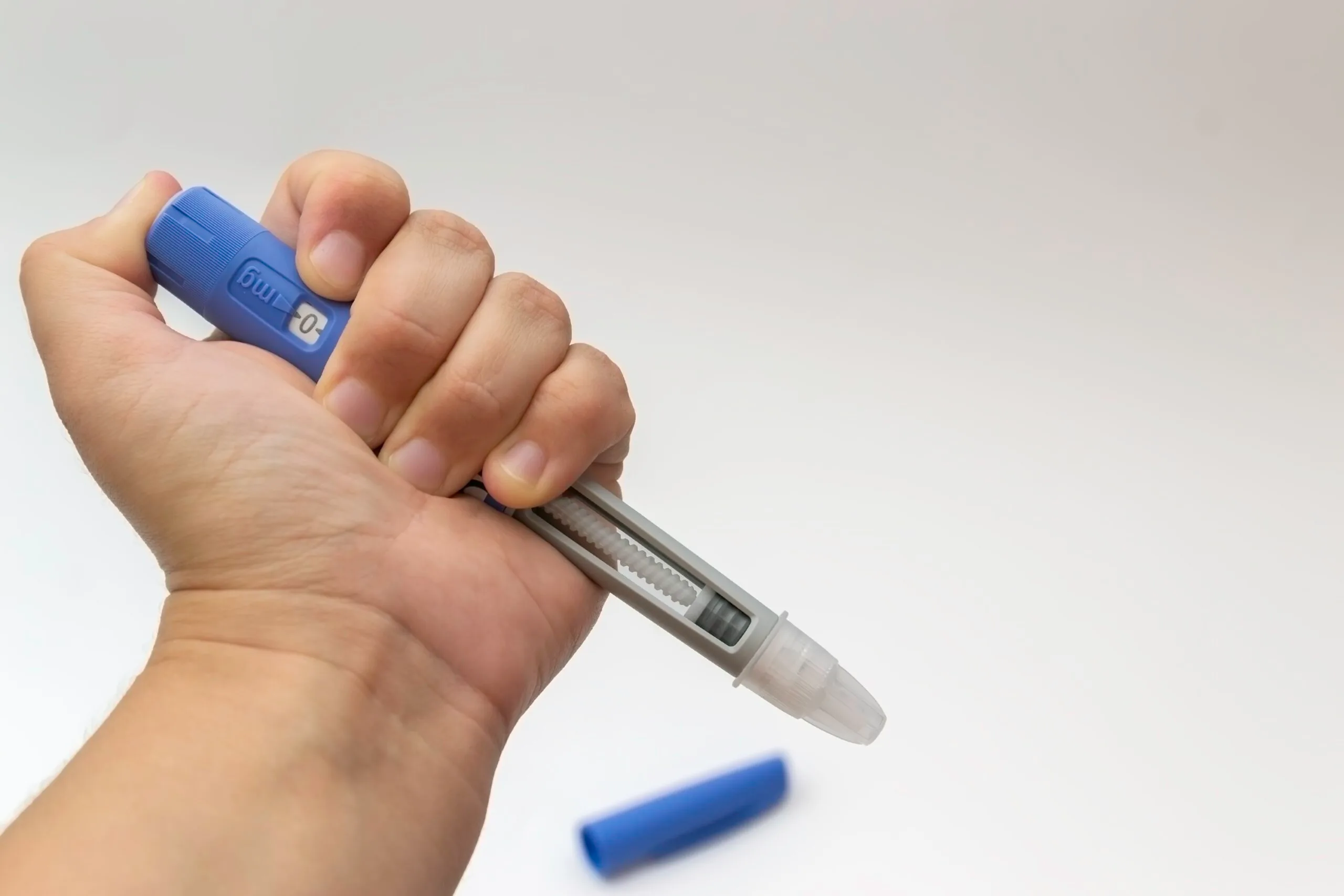
If you’re unfamiliar, Ozempic® is a prescription medication given as a once-weekly injection using a prefilled pen device. It’s FDA-approved to treat type 2 diabetes and to reduce the risk of serious cardiovascular complications in adults with diabetes and heart disease.
Over time, Ozempic® also became widely known for another reason: many clinicians began prescribing it off-label for weight loss because of how it affects appetite and fullness.
The active ingredient, semaglutide, works by mimicking a hormone called GLP-1. It helps regulate blood sugar, slows digestion, and reduces appetite. For many people, that means eating less without feeling constantly hungry, along with steadier blood sugar levels.
Although Wegovy®—which contains the same active ingredient—is now FDA-approved specifically for weight loss, some people continue to use Ozempic® off-label for that purpose.
And this is where the “generic” question comes in. Because these medications can be expensive, many people wonder whether a lower-cost generic version of semaglutide might become available.
Why having a generic Ozempic® matters: Cost and insurance concerns
Much of the excitement around a generic semaglutide comes down to cost. Ozempic® has a list price of nearly $1,000 per month without insurance, and even for people with coverage, access isn’t guaranteed. Insurance plans typically cover Ozempic® for type 2 diabetes—not for off-label weight loss—and approval often requires prior authorization. That can mean documentation from a clinician, confirmation of a type 2 diabetes diagnosis, and sometimes proof that other medications were tried first.
Because many people stay on GLP-1 medications for two years or longer to maintain results, those monthly costs can add up quickly.
When generics become available, they’re usually priced lower than their brand-name counterparts. That lower price often makes it easier for insurance plans to add them to their formularies (lists of covered medications), which can translate to lower copays and fewer access hurdles. Prior authorization may still apply, depending on the plan, but overall barriers tend to be reduced.
If a generic semaglutide eventually reaches the market, it could meaningfully improve affordability and expand coverage—particularly for people managing type 2 diabetes.
Why Ozempic® doesn’t have a generic yet
Ozempic® doesn’t have a generic yet because it’s protected by several patents that cover many aspects of how it is made and used. Those overlapping layers of protection delay generic competition.
Research shows that GLP-1 medications like Ozempic® are often protected by multiple patents—about 19 or 20 per drug on average. And interestingly, many of those patents aren’t for the medication itself, but for things like the injection pen and delivery system.
For semaglutide, Novo Nordisk holds the main patents on the drug’s chemical makeup through about 2031 to 2032. On top of that, there are additional patents tied to how the medication is formulated and administered. Together, those overlapping protections make it harder for generics to enter the market anytime soon.
At a high level, those protections include:
- Semaglutide as the active ingredient: Novo Nordisk holds core patents on the chemical composition of semaglutide itself. These patents are widely reported to extend into the early 2030s..
- Injection device and formulation patents: Ozempic® is delivered through a prefilled, once-weekly injection pen. Separate patents may cover the formulation that keeps semaglutide stable, the dosing mechanism, and the design of the injection device itself. That means even if ingredient patents expire, device-related patents can still limit how a comparable product is made and delivered.
When will generic Ozempic® be available?
Again, it’s hard to know when Ozempic® and semaglutide will be out on the market as generics. Most patent timelines and expert reporting point to the early 2030s as the earliest realistic window in the United States.
Some Ozempic®-related device patents begin expiring sooner, but the most important protections are tied to semaglutide itself. Patent listings show key substance patents extending to around 2032 in the U.S., with additional formulation-related patents that may stretch later (in some cases, into the late 2030s).
Even once major patents expire, generics don’t appear overnight. In most cases, a generic manufacturer still needs time to develop an equivalent product, run required testing, submit an application to the FDA, and scale manufacturing. For a complex injectable drug like Ozempic®, that process can take months to years, even after the legal barriers drop.
Real-world example: Liraglutide’s path to generic
A helpful real-world example is how liraglutide—another GLP-1 medication—transitioned from brand-name products to generic versions. Like semaglutide, liraglutide belongs to the same drug class and works on GLP-1 hormone pathways that regulate blood sugar and appetite.
The brand structure follows a similar pattern: Victoza® and Ozempic® are approved for type 2 diabetes, while Saxenda and Wegovy are approved for weight management.
Here’s how liraglutide progressed to generic availability:
- 2010: Novo Nordisk launched Victoza® (liraglutide) for type 2 diabetes.
- 2014: The same active ingredient was approved at a higher dose as Saxenda® for weight loss.
- 2024: Generic liraglutide was first approved for type 2 diabetes in Victoza®-equivalent doses.
- 2025: Generic liraglutide expanded into weight-loss dosing, aligning with Saxenda®-equivalent strengths.
Generic versions appeared relatively quickly on the diabetes side because Novo Nordisk partnered with Teva Pharmaceutical Industries to help manufacture and distribute an authorized generic. After that, additional manufacturers gradually entered the market with their own versions, increasing supply over time. But even then, it wasn’t an overnight shift—availability expanded step by step.
That’s why liraglutide is such a useful comparison for semaglutide. Even after key patents begin to expire, generics don’t immediately flood the market. Companies still need time to complete regulatory review, prove their version is equivalent, and build the manufacturing capacity needed for a complex injectable drug. If Novo Nordisk were to partner with another company, the generic would likely come sooner.
Generic Ozempic®: Factors influencing timelines
It’s also worth keeping in mind that generic timelines are rarely exact. Even when patent expiration dates look clear on paper, a few key factors can shift the timeline:
- Patent disputes. Brand-name manufacturers and generic companies often end up in legal battles that can delay launch dates.
- Manufacturing challenges. Injectable GLP-1 medications are much more complex to produce than pills, and scaling up safely takes time.
- Regulatory review. The FDA still has to review and approve each generic version, and timelines can vary depending on the product.
So while the early 2030s is a common estimate for when generic semaglutide (like Ozempic®) could become widely available in the U.S., the exact timing will depend on how those legal, technical, and regulatory pieces play out—just like we saw with liraglutide.
When will the price of Ozempic® go down?
In recent years, both federal policy changes and manufacturer pricing updates have begun reshaping how much people pay for high-cost medications like Ozempic®. While the list price hasn’t disappeared, there are now more pathways to lower out-of-pocket costs than there were just a few years ago.
Here’s what’s changing:
- Medicare drug price negotiation (starting 2026–2027): Under the Inflation Reduction Act, Medicare can now negotiate prices for certain high-cost medications, including semaglutide. Negotiated prices are expected to begin taking effect in 2026, with additional adjustments through 2027. For Medicare beneficiaries, this could significantly reduce out-of-pocket costs over time.
- Medicare Part D out-of-pocket cap: Recent updates to Medicare Part D include a $2,100 annual cap on prescription drug spending. While this doesn’t lower the official list price of Ozempic®, it limits how much Medicare beneficiaries pay each year and makes costs more predictable.
- NovoCare® Pharmacy cash pricing: For people paying out of pocket, NovoCare® Pharmacy offers lower direct pricing. Prices range from $199 to $499 per month, depending on dose.
- Lower list prices starting in 2027:Beginning January 1, 2027, Novo Nordisk plans to reduce U.S. list prices for Ozempic®, Wegovy®, and Rybelsus® to approximately $675 per month, down from current list prices that often exceed $900–$1,300. This reduction may lower coinsurance costs for people whose out-of-pocket payments are tied to the list price.
Novo Nordisk also offers savings cards and patient assistance programs for eligible people. For example:
- People with commercial insurance may qualify for copay cards that reduce monthly costs significantly.
- Uninsured or those with lower income may be eligible for patient assistance programs, which can provide medication at reduced cost or, in some cases, at no cost.
What this means overall
Even with these changes, Ozempic® remains a high-cost medication. But between Medicare reforms, manufacturer pricing programs like NovoCare®, and savings options, there are now more ways to lower costs than there were just a few years ago. The exact price you’ll pay still depends on your insurance, eligibility for discounts, and where you fill your prescription.
Learn more: Ozempic® cost without insurance: What to expect in 2026
What could a generic Ozempic® cost?
Predicting the price of a future generic Ozempic® or semaglutide isn’t straightforward. In many cases, generics are 80 to 90% cheaper than brand-name versions, but that pattern doesn’t always hold—especially for injectable medications like GLP-1s.
To get a sense of what might happen, it helps to look at current pricing and trends in similar drugs. The list price for Ozempic® is about $998 per month. This high baseline sets the stage for how much savings a generic might offer.
Generic liraglutide: When generic liraglutide reached the market, it came in at roughly $470 to $704 per month, for the 2- to 3-pen packages equivalent to Victoza. The 5-pen packages used for weight loss can cost from $370 to $1,240. Here’s a look at the differences compared to the branded medications:
| Comparison (4 weeks) | Generic price | Brand price |
|---|---|---|
| Victoza® | $228–$709 (3 pens)$160–$550 (2 pens) | $815 (3 pens)$543 (2 pens) |
| Saxenda® | $370–$1,240 (5 pens) | $1,349 / month |
While there are differences, in some cases, it isn’t significant, and the ranges can be broad.
International indicators: Some Canadian pricing data suggest that generic semaglutide could cost around $100–150 per month (CAD), or roughly $75 to $110 (USD) once multiple competitors are available. That’s a useful reference, but not a guaranteed U.S. outcome—prices here depend on different market forces and insurance systems.
How do generic drugs actually work?
Generic drugs are true copies held to strict FDA standards designed to make sure they work the same way as the brand-name medication.
To be approved, a generic must have:
- the same active ingredient
- the same strength,
- the same dosage form (like a tablet, injection, or liquid)
- the same route of administration (such as oral or injectable)
In other words, it has to match the original drug in all the ways that matter for safety and effectiveness.
One of the biggest requirements is something called bioequivalence. In plain language, bioequivalence means the FDA requires evidence that the generic delivers the medication into your body at the same rate and in the same amount as the brand-name drug. If two drugs are bioequivalent, your body should absorb them in essentially the same way, which is why most people can switch between brand-name and generic versions without noticing any difference in results.
That process is usually more straightforward for standard pills. But injectable medications—especially complex ones like GLP-1 drugs—are harder to replicate. The FDA explains that “complex” products may involve additional challenges beyond the active ingredient, including how the drug is manufactured, how stable it is over time, and how it’s delivered. Injectable drugs also require sterile production, highly controlled formulation, and consistent dosing.
And for pen-injector medications, the delivery device adds another layer of complexity. All of this helps explain why generic versions of injectable drugs often take longer to develop, review, and bring to market than typical tablet generics
More questions about generic Ozempic®
People have many questions about when a generic version might become available and how it could affect their access to this medication. These answers address the most common concerns about timing, cost, and coverage based on current regulatory information.
What’s the earliest Ozempic® could come out as a generic?
The earliest generic Ozempic® could appear is March 2026 in India, where patents expire first. Multiple Indian drugmakers have already received approval to manufacture generic versions. In the U.S., patents don’t expire until around 2032, making that the earliest possible timeline here.
Will insurance cover generic Ozempic® when it’s available?
Insurance will likely cover generic Ozempic® similarly to how they cover the brand version now. That means more likely coverage for diabetes than weight loss, with prior authorization often required. Generic medications typically have lower copays than brand-name versions, which could reduce your out-of-pocket costs.
Could the Wegovy® pill become generic before the injection?
Wegovy® is now available in a pill as of January 2026, and it has a similar patent timeline. There is also another oral version of semaglutide called Rybelsus®, which also has the same patent timeline. Since each of these versions contains semaglutide as its active ingredient and their patents will expire at similar times, all semaglutide products will likely become generic around the same time in each country.
Are other GLP-1 generics coming before Ozempic®?
Generic liraglutide is already available, but costs vary compared to the branded versions, Victoza and Saxenda. This gives people more affordable options while waiting for generic Ozempic® as well as generic versions of tirzepatide medications like Mounjaro® and Zepbound®, whose patents will expire in 2036.
Are generics always cheaper?
Generics are typically 80 to 85% cheaper than brand-name drugs once competition develops. But injectable GLP-1 generics may start at higher prices than typical generics due to complex manufacturing. Costs typically drop further as more companies enter the market and competition increases.
What countries have generic Ozempic®?
Currently, no country has FDA-approved generic Ozempic®, but several are expected to in 2026. India will likely be first, followed by China, Brazil, and Canada. Industry experts predict these markets could see price reductions up to 75%.
What’s the most affordable way to get Ozempic without insurance?
Currently, the cheapest option for getting Ozempic® without insurance is through the manufacturer’s NovoCare® Pharmacy. With this option, you’ll pay from $199 to $499 per month, depending on the dose.
The bottom line: There isn’t a generic Ozempic®, but pressure on prices is growing
For now, there is no generic Ozempic® or semaglutide in the United States, and most timelines point to the early 2030s as the earliest realistic window. Patent protections on the drug itself— along with additional patents covering formulation and injection devices—continue to delay competition. Even once those protections expire, generic manufacturers will still need time to develop, test, and gain approval for equivalent versions of this complex injectable medication. In other words, a lower-cost generic isn’t right around the corner.
That said, the absence of a generic doesn’t mean access is frozen in place. Medicare price negotiations, Part D out-of-pocket caps, manufacturer savings programs, and growing competitive pressure are already shifting the cost landscape. Prices may continue to evolve before a generic ever arrives. If you’re considering Ozempic® or another semaglutide medication, the most important step is understanding your insurance coverage, available savings programs, and long-term plan—because for many people, these medications are not short-term prescriptions, but multi-year commitments.
If you’re interested in finding the right medication for you, see if you qualify for Noom Med. Noom Med pairs prescription access with psychology-based coaching, exclusive muscle-building exercises, our exclusive GLP-1 Companion, meal planning and tracking, and more to help you lose weight while building habits that last.
Editorial standards
At Noom, we’re committed to providing health information that’s grounded in reliable science and expert review. Our content is created with the support of qualified professionals and based on well-established research from trusted medical and scientific organizations. Learn more about the experts behind our content on our Health Expert Team page.