Garlic already has a reputation as a healthy staple, with research linking it to benefits for heart health, immune function, and inflammation levels. It’s been used for centuries across cultures—partly for flavor, partly for its natural compounds—and modern research has helped explain why it keeps showing up in healthy eating patterns.
But can it help you lose weight, too?
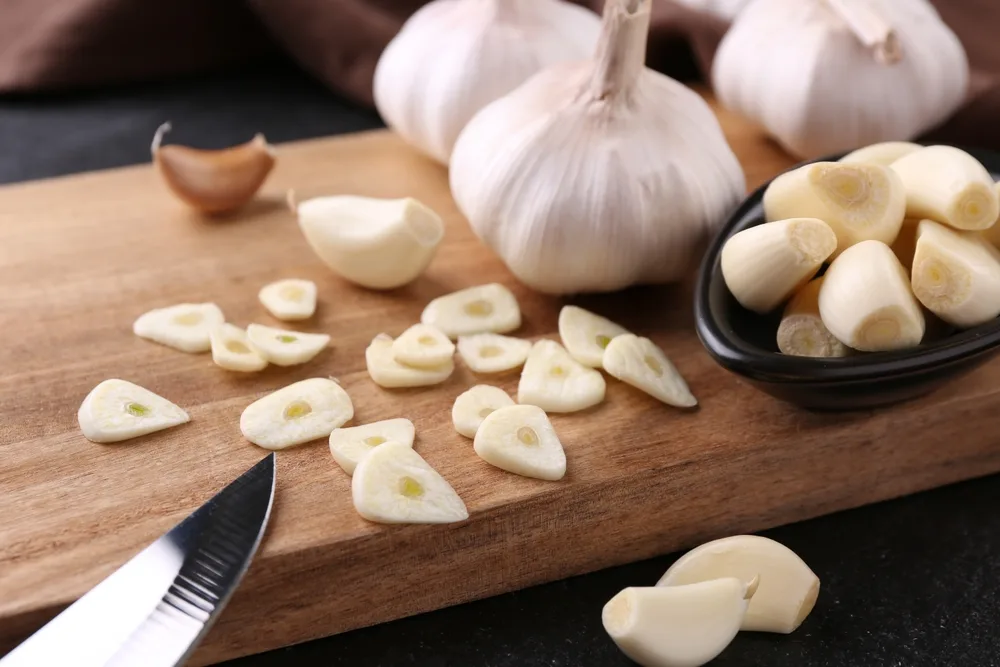
From a calorie standpoint, it checks the right boxes. A few cloves (about 2 to 3) add bold, savory flavor for just 13 to 14 calories, which can make simpler, lower-calorie meals feel more satisfying. That shift matters more than it sounds—when food actually tastes good, you’re more likely to stick with it.
There’s also a growing body of research looking at garlic’s potential role in weight and metabolic health. When garlic is chopped or crushed, it forms compounds like allicin, which have been studied for their effects on fat metabolism, blood sugar control, cholesterol levels, and inflammation. These aren’t direct fat-loss mechanisms, but they’re all part of the bigger picture of metabolic health, which influences how your body loses and maintains weight over time.
Beyond weight loss, garlic is also associated with broader health benefits that build over time. Regular intake has been linked to improvements in heart health markers like blood pressure and cholesterol, and diets that include garlic are often associated with better long-term health outcomes, including longevity.
Garlic isn’t a shortcut—but it’s not just a neutral flavor-enhancer either. It’s a small, consistent addition that can make healthy eating easier, support overall metabolic health, and contribute to long-term well-being in ways that go beyond the scale.
✅ Quick answer
Yes, garlic can support weight loss. At roughly 13 to 14 calories per 2 to 3 crushed cloves, it adds intense, satisfying flavor to meals without meaningfully affecting calorie count. Compounds in it—particularly allicin—have been studied for their effects on metabolism, fat storage, inflammation, and blood sugar. As a regular part of a balanced diet, it consistently earns its place.
🚀 Weight-loss benefits
- It adds a lot of flavor for very few calories – A clove or two of garlic adds bold, satisfying flavor for under 15 calories. That matters because sticking with a calorie deficit often comes down to how enjoyable your food is. Garlic helps on that front without meaningfully impacting your daily intake.
- It contains compounds linked to metabolic and inflammatory processes – When garlic is chopped or crushed, it forms compounds like allicin that have been studied for their effects on inflammation, blood sugar, and other aspects of metabolic health. These effects aren’t dramatic on their own, but they’re part of the broader picture of how your body processes energy.
- It may support fat metabolism – Some research suggests garlic compounds may influence how the body stores and uses fat, including effects on fat cell development and metabolic signaling. The data is still limited, but it points to a potentially supportive role over time.
⚠️ Things to be mindful of:
- It’s not very filling on its own – Garlic is a flavor booster, not a main ingredient. Two to three cloves provide less than a gram of protein and little to no fiber, so it’s not going to keep you full—but it can make more filling foods a lot more satisfying.
- Raw garlic can be tough on your stomach – For some people, raw garlic can lead to heartburn, bloating, or general stomach discomfort, especially if you eat it on an empty stomach. Cooking it—whether lightly sautéed or roasted—usually makes it easier to tolerate without losing its benefits.
- It works best as a consistent habit – Garlic isn’t something you add once and notice a difference. The research around metabolic and heart health tends to look at regular, ongoing intake. It’s more about using it often than using a lot at once.
🥗 Nutrients in garlic (per 2 to 3 cloves crushed, about 9g)
| Nutrient | Amount | % RDA* |
|---|---|---|
| Calories | 13 calories | <1% |
| Protein | 0.6 g | 1% |
| Total carbs | 3.0 g | 1% |
| Fiber | 0.2 g | <1% |
| Sugars | 0.1 g | — |
| Total fat | <0.1 g | <1% |
| – Saturated fat | <0.1 g | <1% |
| – Monounsaturated fat | 0.0 g | — |
| – Polyunsaturated fat | <0.1 g | — |
| Omega-3 | 0.0 g | — |
| Omega-6 | <0.1 g | — |
*Recommended dietary allowance (RDA) is defined as the average daily amount of nutrients needed to meet the requirements of nearly all healthy people in a specific group.
Two to three cloves of garlic have trace amounts of carbs, fat, and protein. Where garlic gets more interesting is beyond the nutrition facts. It contains compounds like allicin, along with other sulfur-containing compounds and antioxidants, that are the focus of most health research. These don’t show up in a typical nutrient table, but they’re why garlic continues to be studied for its effects on metabolic and overall health.
💊 Vitamins & minerals in garlic (per 2 to 3 cloves crushed, about 9g)
| Vitamin/Mineral | Amount | % RDA* |
|---|---|---|
| Manganese | 0.15 mg | 7% |
| Vitamin B6 | 0.11 mg | 7% |
| Vitamin C | 2.8 mg | 3% |
| Copper | 0.03 mg | 3% |
| Selenium | 1.3 µg | 2% |
| Phosphorus | 14 mg | 1% |
| Calcium | 16 mg | 1% |
| Thiamin (B1) | 0.02 mg | 2% |
| Zinc | 0.10 mg | 1% |
| Iron | 0.15 mg | 1% |
| Potassium | 36 mg | <1% |
| Riboflavin (B2) | 0.01 mg | <1% |
| Niacin (B3) | 0.06 mg | <1% |
At this serving size, the numbers are modest—which makes sense, since you’re using garlic as a seasoning, not a main ingredient. Still, a couple of nutrients stand out. Manganese and vitamin B6 each come in around 7% of your daily needs, and that can start to add up if garlic is something you use regularly.
Manganese plays a role in how your body processes carbs, fat, and protein, while vitamin B6 is involved in things like hormone balance, immune function, and even mood—all of which can indirectly shape how you feel and function day to day.
Selenium shows up in smaller amounts, but it’s still worth noting. It supports thyroid function, which is tied to how your metabolism runs. On its own, garlic isn’t moving the needle here—but used consistently, these small contributions can stack up in a way a single serving doesn’t fully capture.
🔍 Nutrient breakdown
Glycemic index (GI) of garlic
Glycemic index: 10–30 (Low)
💡 Tip: Despite containing some carbs, garlic has minimal impact on blood sugar at realistic serving sizes—an important consideration for managing insulin levels and supporting long-term fat metabolism.
Is garlic high in protein?
❌ No – garlic contains about 0.6g of protein per 2 to 3 cloves. That’s not a meaningful contribution. Garlic is a flavor and bioactive compound source, not a protein source—pair it with protein-rich foods to drive satiety.

The Easy Way
to lose weight and get healthy.
See if you qualify
Better protein alternatives: Chicken breast | Greek yogurt | Edamame
Is garlic high in fiber?
❌ No – garlic has under 0.2g of fiber per serving. That said, the fructans in garlic act as prebiotics, feeding beneficial gut bacteria in ways that support digestion and metabolic health beyond what simple fiber content suggests.
💡 Tip: Think of garlic as a gut health contributor rather than a fiber source, and pair it with high-fiber vegetables to get the full benefit.
Is garlic low in carbs?
✅ Yes – at 2 to 3 cloves, garlic has about 3g of total carbs, with net carbs well under 3g. At realistic serving sizes, it’s a very-low-carb ingredient.
💡 Tip: If you’re following a low-carb or keto eating pattern, use garlic freely as a seasoning—the carb contribution is negligible.
Is garlic gluten-free?
✅ Yes – garlic is naturally gluten-free in all forms: raw, roasted, minced, or powdered. People with celiac disease or gluten sensitivity can eat it without concern. Just check labels on pre-seasoned products or garlic bread, which may contain gluten.
Is garlic good for fat loss?
✅ Yes – thanks to its essentially zero-calorie footprint at normal serving sizes and its documented effects on fat metabolism and inflammation, garlic is a useful tool for fat loss as part of a balanced diet.
💡 Tip: Using garlic generously in cooking keeps meals flavorful and satisfying—which makes it easier to maintain a calorie deficit over the long haul.
🍽️ Diet compatibility: Which diets include garlic?
| Diet | ✅/❌ | Why |
|---|---|---|
| Keto | ✅ | At typical serving sizes, garlic adds negligible carbs—well under 3g net per recipe—making it easy to include without disrupting ketosis. |
| Paleo | ✅ | Garlic is a whole, unprocessed plant food that fits squarely within Paleo guidelines and has been eaten by humans for thousands of years. |
| Mediterranean | ✅ | Garlic is a cornerstone of Mediterranean cooking, featured across cuisines from Spain to Greece to the Middle East. |
| Vegan | ✅ | Garlic is 100% plant-based and helps build the rich, savory flavors that can feel missing when animal products are removed from dishes. |
| Gluten-free | ✅ | Fresh, raw, or minimally processed garlic is naturally gluten-free. Check labels on pre-minced jars or powders for additives, but whole garlic cloves are always safe. |
Garlic is one of those rare ingredients that works across almost any way of eating. No matter how you structure your meals, it tends to fit in.
The main exception is low-FODMAP diets. Garlic is high in fructans, which can trigger digestive symptoms for some people, especially those with IBS. If that’s a concern, garlic-infused oil is a simple workaround—it gives you the flavor without the compounds that tend to cause issues.
🌟 Is garlic healthy? What are the health benefits?
Metabolic health: Is garlic good for your metabolism?
- Boosts metabolism? ✅ Yes – Animal studies and some human research suggest that allicin and related sulfur compounds in garlic can influence fat metabolism at a cellular level. Garlic has been shown to increase the expression of enzymes involved in energy expenditure in fat tissue. The effect is modest but real.
- Improves insulin sensitivity? ✅ Yes – Garlic appears to support insulin sensitivity through several pathways, including reducing oxidative stress and inflammation. Some studies have found that garlic supplementation was associated with meaningful reductions in fasting blood glucose in people with type 2 diabetes.
- Effect on fat storage? Helps prevent – Research suggests garlic compounds may slow the process by which immature fat cells develop into mature ones and may support the breakdown of existing fat stores. The evidence is more established in animal models, but human data is growing.
💡 Tip: Pair garlic with olive oil—the fat in olive oil helps absorb fat-soluble garlic compounds and adds heart-healthy fats to the meal.
Cholesterol impact: Does garlic affect cholesterol levels?
- Does it lower LDL (bad) cholesterol? ✅ Yes – Multiple analyses have found that regular garlic consumption produces meaningful reductions in total cholesterol and LDL. The effect is typically around 10–15%, which adds up over time.
- Does it raise HDL (good) cholesterol? Possibly – Some studies show small increases in HDL with garlic, but the evidence is less consistent. The lipid-lowering benefit is primarily on the LDL side.
- Overall impact on heart health? Favorable – Beyond cholesterol, garlic has demonstrated blood pressure-lowering effects in studies of people with mild hypertension. It also reduces the tendency of blood to clot unnecessarily, contributing to broader cardiovascular protection.
💡 Tip: Aged garlic extract has the most consistent evidence for cardiovascular benefits and may be worth considering as a supplement if cooking with whole garlic isn’t part of your regular routine.
Can I eat garlic for a calorie deficit?
✅ Yes: A few cloves add virtually zero calories while making lower-calorie meals taste rich and satisfying. Strong, savory flavors make smaller portions feel more complete and reduce the pull toward additional snacking. The ability to genuinely enjoy food you’re eating less of is what makes a calorie deficit sustainable rather than short-lived.
💡 Tip: Roasting a whole head of garlic until the cloves are soft and caramelized gives you a deeply savory spread with almost no calories. Use it in place of butter on vegetables or whole-grain bread.
Is garlic rich in antioxidants?
✅ Yes: Garlic contains several notable antioxidants including allicin, quercetin, and organosulfur compounds. These help neutralize free radicals and reduce oxidative stress. Garlic’s antioxidant profile is part of why it’s been studied for its role in long-term disease prevention.
💡 Tip: Let crushed or minced garlic sit for 10–15 minutes before cooking—this gives the allicin-producing enzyme reaction time to complete, preserving more of the beneficial compounds even after heat exposure.
Does garlic support gut health?
✅ Yes: Garlic contains fructooligosaccharides (FOS), which function as prebiotics and selectively feed beneficial bacteria like Lactobacillus and Bifidobacterium. A healthier gut microbiome is linked to better metabolic function, reduced inflammation, and even improved mood.
Does garlic support digestion?
✅ Yes, for most people: Garlic supports the overall digestive environment through its prebiotic and antimicrobial properties, helping to keep gut bacteria in a favorable balance. People with IBS or FODMAP sensitivities may find garlic triggers gas or bloating, especially raw. Cooking reduces the fructan content; garlic-infused oil is the most practical workaround for sensitive guts.
💡 Tip: If you have a sensitive gut, start with cooked garlic in small amounts before trying it raw.
Does garlic help you feel satiated and less hungry?
Low on its own / High as a meal enhancer: Garlic itself won’t fill you up—but its impact on satisfaction is real. Strong, savory flavors make smaller portions feel more complete and reduce the pull toward additional snacking afterward.
Access GLP-1 Weight Loss with Noom
Explore a wide range of prescription medications supported by Noom’s program.Microdose GLP-1rx
Noom GLP-1rx
Noom GLP-1rx Plus
Wegovy®
Ozempic®

Metformin
Zepbound®
Mounjaro®
Liraglutide
Satiety level: Low on its own / High as a meal enhancer
💡 Tip: Add garlic to high-volume, lower-calorie foods—sautéed greens, roasted vegetables, broth-based soups—to make them feel more satisfying than their calorie counts suggest.
Does garlic help with nighttime cravings?
✅ Indirectly, yes: Garlic makes savory evening meals feel hearty and complete, which can reduce the pull toward post-dinner snacking. By increasing meal satisfaction, it helps address the root cause of nighttime cravings rather than just the craving itself.
Does garlic help reduce inflammation?
✅ Yes: Garlic’s sulfur compounds and antioxidants have well-documented anti-inflammatory effects. Chronic, low-grade inflammation is increasingly recognized as a driver of weight gain and insulin resistance, making garlic’s anti-inflammatory properties relevant to both weight management and long-term health.
Is garlic beneficial for brain health?
✅ Yes, promising early evidence: Organosulfur compounds in garlic may help protect against age-related cognitive decline, and some research links regular garlic consumption to a reduced risk of certain neurodegenerative conditions. Most studies are still in early stages, but the direction is encouraging.
Can garlic improve skin and hair health?
Possibly: Garlic’s antimicrobial properties have been studied for certain skin conditions, and its sulfur content supports keratin production, which is important for hair and nail strength. The evidence here is limited or mostly anecdotal.
Can garlic help balance hormones?
✅ Modestly: Garlic appears to support healthy cortisol regulation and thyroid function through its selenium content and anti-inflammatory action. Reduced chronic inflammation generally supports better hormonal balance. Direct hormonal effects are less established than its cardiovascular or metabolic benefits.
💡 Tip: Thyroid health is directly tied to metabolic rate—and garlic’s selenium content makes it a consistent, small contributor to thyroid support.
🍽️ Best ways to eat garlic for weight loss
- Add it to savory dishes – Garlic works in many savory dishes: roasted vegetables, soups, stir-fries, marinades, sauces, and grain bowls all benefit from a few sauteed cloves. Building this as a daily habit means you’re consistently adding a flavorful, health-supporting ingredient without many calories.
- Use it raw for maximum anti-inflammatory benefits – Raw, freshly crushed garlic has the highest allicin content of any preparation. Add it to dressings, stir it into hummus, or add it to cooked dishes at the very end rather than sautéing from the start. Letting it rest for 10 to 15 minutes after crushing preserves more of the beneficial compounds.
- Don’t rely on garlic powder as your only source – Garlic powder is convenient and still provides some benefit, but most of the allicin is lost during processing. It works as a complement to whole garlic, but it shouldn’t be your primary form if you’re using it specifically for health reasons.
National Garlic Day is April 19. Try these healthy recipes:
🍏 Best alternatives & comparisons (9g serving)
| Food | Calories | Carbs | Fiber | Protein | Fat |
|---|---|---|---|---|---|
| Garlic | 13 | 3.0 g | 0.2 g | 0.6 g | <0.1 g |
| Onion | 4 | 0.8 g | 0.2 g | 0.1 g | <0.1 g |
| Shallots | 6 | 1.5 g | 0.3 g | 0.2 g | <0.1 g |
| Leeks | 5 | 1.3 g | 0.2 g | 0.1 g | <0.1 g |
| Ginger | 7 | 1.6 g | 0.2 g | 0.2 g | <0.1 g |
| Fresh turmeric | 32 | 5.8 g | 2.0 g | 0.7 g | 0.9 g |
At these serving sizes, all of these contribute very few calories per dish, so direct calorie comparisons matter less than their individual health profiles. Onion is the most common substitute and brings similar prebiotic benefits at even lower calories—but without the allicin-specific effects that make garlic useful for metabolism and heart health.
Ginger works well as a complement to garlic rather than a replacement. The two are frequently used together, and the combination has additive anti-inflammatory and digestive benefits. Fresh turmeric stands out for its fiber content, even in small amounts, and pairs naturally with garlic in many of the same dishes. Used together, garlic, ginger, and a pinch of turmeric cover a lot of ground from a health perspective.
Frequently asked questions about garlic and weight loss
How much garlic should I eat per day for weight loss?
Most research on garlic’s health benefits involves roughly 2 to 4 cloves of fresh garlic per day, or an equivalent amount from aged garlic extract. There’s no magic number, but consistent daily use—worked into your regular cooking—matters more than any specific dose. A few cloves across your meals adds up over time.
How many calories are in a roasted head of garlic?
A whole roasted head of garlic (about 10 to 12 cloves) contains roughly 60 to 80 calories. Keep in mind that roasting it with oil can increase the total, depending on how much you use.
Is raw garlic better than cooked for weight loss?
Raw garlic has higher allicin content, which is the compound most associated with metabolic and cardiovascular benefits. That said, cooked garlic still delivers benefits—especially if you let it rest for 10 to 15 minutes after crushing before it hits the heat. If you don’t tolerate raw garlic well, cooked is still worth eating consistently.
Can garlic help reduce belly fat specifically?
There’s no food that targets belly fat specifically—that’s not how fat loss works. But garlic’s effects on reducing inflammation, supporting insulin sensitivity, and influencing fat cell formation may contribute to overall fat loss over time. It’s a useful ingredient within a broader calorie-deficit approach, not a standalone solution.
Is garlic powder as good as fresh garlic?
Not quite. Garlic powder loses most of its allicin during processing, so if you’re using garlic specifically for its health benefits, fresh or minimally processed garlic is the better choice. Garlic powder is still useful for flavor and retains some beneficial compounds—it just shouldn’t be your only form.
Can garlic irritate my stomach?
Yes, some people have a tough time digesting raw garlic on an empty stomach. It can cause heartburn, gas, or bloating in sensitive individuals, largely due to its fructan content. Cooking garlic typically resolves this. If you have IBS or follow a low-FODMAP diet, garlic-infused oil is the most practical workaround: the flavor transfers to the oil without the problematic compounds.
Does garlic interact with any medications?
Garlic has mild blood-thinning properties, so people taking blood thinners like warfarin should check with their doctor before significantly increasing their garlic intake or taking garlic supplements. At normal cooking amounts, this is rarely a concern, but it’s worth flagging if you’re considering supplementation.
🧠 The bottom line: Garlic can be part of a weight loss approach
Garlic won’t fill you up or provide meaningful protein or fiber at typical serving sizes. But it still earns a place in a weight loss approach for reasons that go beyond raw numbers. Its near-zero-calorie footprint, combined with research linking it to areas like blood sugar, cholesterol, and inflammation, makes it a useful ingredient to cook with regularly.
The key is consistency—a few cloves across your everyday meals add up over time. It makes food taste better, which can make healthy eating easier to stick with, and it may offer some broader metabolic and heart health support along the way. For something with virtually no downside at normal serving sizes, it’s one of the simplest habits to build.
📖 Scientific evidence
- Garlic may help support healthier cholesterol levels. (Nutrition Reviews, 2013) An analysis of several trials found that garlic in forms like powders, aged extracts, and supplements (rather than just fresh cloves) was associated with reductions in total cholesterol and LDL, especially with consistent use over two months or more
- Garlic may help support healthy blood pressure levels. (Maturitas, 2010) In one study, a concentrated garlic extract lowered the top number in blood pressure readings (systolic) in people with uncontrolled blood pressure, with effects similar to some commonly prescribed medications.
- Garlic compounds may play a role in how fat cells develop and store fat. (Experimental and Therapeutic Medicine, 2021) In a lab study, a compound found in garlic called alliin was shown to slow the development of immature fat cells and reduce fat accumulation, suggesting a possible way garlic could influence fat storage.
- Garlic may help support blood sugar control, especially in people with type 2 diabetes. (Food & Nutrition Research, 2017) A large analysis found that garlic supplementation was associated with lower fasting blood sugar levels and improvements in cholesterol markers.
- Garlic may help support gut health by feeding beneficial bacteria. (Microorganisms, 2024) Research found that garlic acts as a prebiotic, helping certain “good” gut bacteria grow and shifting the microbiome in ways linked to better metabolic health.
Editorial standards
At Noom, we’re committed to providing health information that’s grounded in reliable science and expert review. Our content is created with the support of qualified professionals and based on well-established research from trusted medical and scientific organizations. Learn more about the experts behind our content on our Health Expert Team page.