
What you’ll learn:
- Most lettuce is still safe to eat—the current outbreak has been linked to specific recalled iceberg lettuce products, not produce broadly.
- Checking the recall list and following basic food safety steps can help reduce your risk without giving up fruits and vegetables.
- The investigation is still evolving, so stay up to date with CDC and FDA guidance as new information becomes available.
Fresh greens and vegetables are some of the healthiest foods you can eat, so news of a foodborne illness outbreak linked to lettuce can make the produce aisle suddenly feel a lot less reassuring. News of the 2026 Cyclospora outbreak has moved quickly, and it’s easy to lose track of what’s confirmed versus what’s still under investigation.
That uncertainty appears to be changing shopping habits: one poll found about 4 in 10 Americans are buying or eating less produce because of the outbreak.
But is that actually necessary? Before you swear off salads, it helps to separate what’s confirmed from what’s precautionary.
Here’s a clear breakdown of what’s confirmed, what’s still being investigated, and how to keep eating produce with confidence—with guidance from Maggie Hudspeth, RDN, Senior Manager of Coaching at Noom.
What we know about the Cyclospora outbreak: July 2026
A multistate outbreak of cyclosporiasis—an intestinal illness caused by the parasite Cyclospora cayetanensis—has been linked to a recalled batch of iceberg lettuce. People who become infected often develop watery diarrhea, fatigue, and loss of appetite that can last for weeks without treatment.

The Easy Way
to lose weight and get healthy.
See if you qualify
Cases are still climbing even after the recall, leading investigators to suspect the recalled lettuce may not be the only source. So far, though, no additional source has been confirmed.
- Where it started: Cases began appearing in Michigan in late May 2026.
- How far it’s spread: The initial outbreak tied to Taylor Farms de Mexico lettuce has reached nine states—Illinois, Indiana, Kansas, Kentucky, Michigan, Ohio, Oklahoma, Pennsylvania, and West Virginia—with close to 2,000 confirmed cases and 98 hospitalizations. Nationally, however, cyclosporiasis cases are also rising. The CDC has reported nearly 12,000 confirmed and probable cases across 41 states this season, far above the roughly 200 to 1,000 cases typically reported in a year. Not all of those illnesses are part of the nine-state lettuce outbreak—New York and North Carolina, for example, have separate clusters under investigation.
- What’s confirmed as the source: Investigators traced it to shredded iceberg lettuce from Taylor Farms de Mexico, served at some Taco Bell locations, which has been recalled based on patient interviews and case patterns. The only thing that’s been walked back is a single lab test—a lettuce sample briefly came back positive on July 18, then the FDA called it a false positive the next day.
- What symptoms look like: Cyclosporiasis causes watery diarrhea, fatigue, and loss of appetite that typically starts about a week after exposure and can last for weeks without treatment. Unlike norovirus or salmonella, it usually doesn’t cause vomiting or nausea, and it’s treatable with a course of antibiotics.
- What’s still unknown: The outbreak hasn’t slowed, and investigators still haven’t determined exactly how the contamination happened. That’s not unusual: no Cyclospora outbreak has ever been definitively traced back to the original contamination event. Because the parasite spreads through human waste and is difficult to detect on produce after the fact, identifying exactly where contamination occurred is notoriously challenging.
- What about other produce: Outside the recalled lettuce, there’s currently no evidence tying other produce to this outbreak. Some items with a history in unrelated Cyclospora outbreaks are getting extra scrutiny out of caution, not because they’ve been implicated here.
“A headline about an outbreak can make it feel like the entire produce aisle is suspect. In this case, it’s one supplier, and one recalled product driving nearly all of the confirmed cases. Once you know that, the anxiety usually settles, and the actual to-do list is short: check your fridge against the recall, wash your produce, and move on,” says Hudspeth
Is lettuce safe to eat yet? Which brands are recalled
Most lettuce is currently considered safe to eat. The one confirmed exception is a specific recalled batch of iceberg lettuce, though investigators are still working to determine exactly how the contamination occurred. Here’s what to look for:
Recalled
Iceberg lettuce and products made with it sourced from Taylor Farms de Mexico’s central Mexico supply. The recalled products include Marketside-brand Iceberg Salad (12 oz and 24 oz) and Shredded Lettuce (8 oz and 16 oz) sold at Walmart, with best-if-used-by dates between July 18 and August 3, 2026, plus a longer list of food-service products.
The recall also includes blended products containing iceberg lettuce, including 50/50 and 80/20 blends, chopped salad mixes, and romaine-iceberg combinations. If you have bagged lettuce, mixed greens, or a salad kit at home, check whether iceberg lettuce appears in the ingredients, then compare the brand and dates with the recall list.
Safe with standard precautions
Lettuce from other suppliers, other lettuce varieties, and produce generally. There are currently no confirmed positive product test results for cyclospora outside the recalled batch, and as Consumer Reports notes, officials have stated there’s no data supporting a broader avoidance of fruits and vegetables.
Want extra peace of mind? Choose whole heads of lettuce
Most of us reach for pre-washed bagged greens because they’re convenient.
While the investigation continues, choosing whole heads of lettuce, removing the outer two to three leaves, and rinsing the rest under running water gives you a little more control over preparation.
Commercial washing doesn’t reliably remove Cyclospora, so “pre-washed” isn’t a guarantee, according to Michigan health officials.
If whole heads don’t fit your routine, that’s okay too—just make sure whatever’s in your fridge isn’t on the recall list.

See if your insurance
covers GLP-1s.
The form only takes 2 minutes to answer. We’ll handle the rest.
GET STARTEDOne thing not to bother with: re-washing bags labeled “pre-washed” or “triple-washed.” Most food safety experts advise against it because commercial washing is generally more thorough than a home rinse, and handling the greens again can introduce new contamination without meaningfully reducing risk.
Cyclospora outbreak 2026: Which fruits and vegetables are safe to eat right now
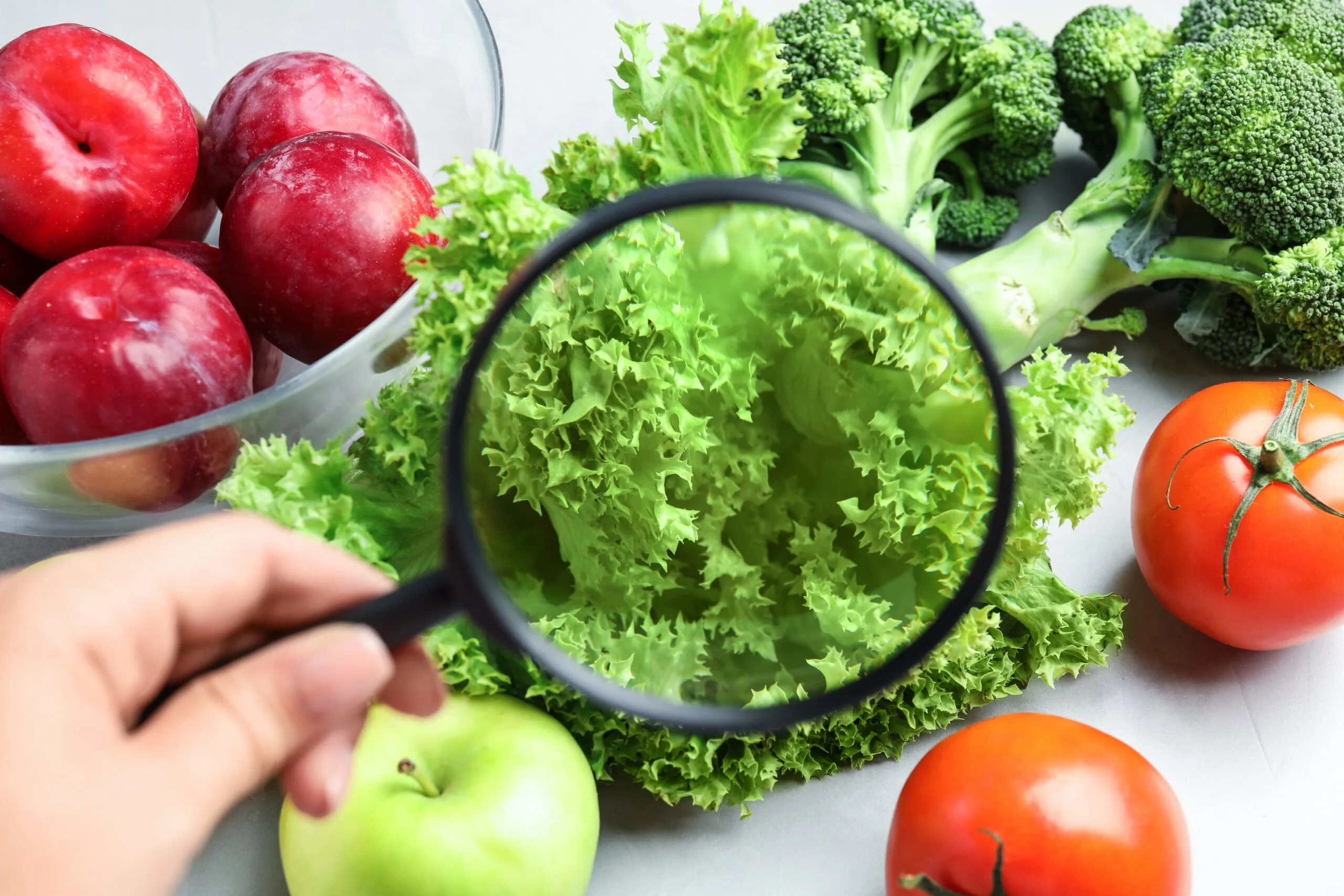
Nearly everything else in the produce aisle is still considered safe to eat. None of the following foods have been named in the current outbreak investigation.
Lettuce and leafy greens
- Romaine, butter lettuce, and other lettuce varieties not included in the recall
- Bagged lettuce and mixed greens not named in the recall (double-check blends containing iceberg lettuce)
- Spinach, kale, arugula, and other leafy greens
Vegetables
- Tomatoes, cucumbers, peppers
- Carrots, broccoli, cauliflower
- Onions, garlic, and other alliums
Fruit
- Apples, pears, citrus
- Bananas, avocados, mangoes
- Melons (scrub the rind before cutting)
- Grapes, pineapple
- Stone fruit
- Strawberries and blueberries
Produce to treat with a little more care
(not linked to this outbreak, but flagged in past ones)
- Basil and cilantro
- Parsley
- Raspberries and other soft, unwashable berries
- Snow peas and sugar snap peas
None of these have been confirmed as a source in the current investigation. Wash them especially well, and for herbs and soft berries that are hard to rinse thoroughly, it’s worth buying from a source you trust—simply because they’ve shown up in unrelated cyclospora outbreaks before. More on that below.
Is restaurant fast-food lettuce safe right now?
The confirmed link in this outbreak is narrow: Taco Bell locations that used shredded iceberg lettuce from Taylor Farms de Mexico. But that supplier’s lettuce didn’t just go to fast food—per reporting, it was also distributed to other restaurants, grocery stores, and even food-service settings like hospitals and stadiums through distributors. So the question isn’t really “is fast food safe” versus “are sit-down restaurants safe”—it’s about whether a given kitchen’s lettuce came from that specific supplier, regardless of what kind of restaurant it is. Here’s where things stand for the businesses that have spoken up so far.
Taco Bell removed the implicated lettuce from every location nationwide, not just the states in the outbreak, and according to the Washington Examiner, it has promoted lettuce-free menu items like its Enchiritos while rebuilding its lettuce supply chain.
Chipotle, Cava, Subway, and Panera have said they don’t source from the implicated supplier. Wendy’s, Jersey Mike’s, and McDonald’s haven’t been named by the CDC or FDA as part of this investigation. The confirmed link is specifically to Taco Bell locations that used Taylor Farms de Mexico lettuce—nothing more, nothing less.
What other foods have been linked to cyclosporiasis outbreaks?
Lettuce isn’t the only produce that’s been connected to cyclosporiasis outbreaks over the years. A review of major outbreaks found that basil and raspberries accounted for about 65% of cases, with cilantro and lettuce responsible for a meaningful share of infections worldwide as well. The FDA’s cyclospora page lists other produce implicated in past U.S. outbreaks, including snow peas, sugar snap peas, mesclun mix, parsley, and green onions.
None of these have been confirmed as sources in the current nine-state outbreak. Some reports are that North Carolina health officials are separately looking into whether parsley and cilantro may be contributing to a rise in cases there, but that’s a distinct, unconfirmed lead—not part of the main investigation.
How to wash and prepare produce safely to avoid Cyclospora
A few habits can help, even though none of them guarantee removal—Cyclospora is notoriously hard to wash off completely:
- Choose whole heads over pre-cut or bagged greens.
- Wash whole, unpackaged produce under running water, even produce you plan to peel. Plain water is what the FDA recommends—soap and bleach aren’t necessary. (Skip re-washing bags already labeled “pre-washed” or “triple-washed”—see above.)
- Cook produce to at least 158°F (70°C) when practical, since cooking is more effective than washing at killing Cyclospora.
- Scrub firm produce like melons and cucumbers with a clean produce brush, and cut away any bruised or damaged areas before eating.
- Wash your hands and kitchen surfaces before and after handling fresh produce.
“None of this requires a special routine—it’s mostly the same habits food safety experts recommend year-round, just worth paying a little more attention to right now. Whole heads over bags, running water, cook when you can. Five minutes, and you can stop thinking about it for the rest of the meal,” says Hudspeth
FAQs about the Cyclospora outbreak
Is the Cyclospora outbreak over?
Not yet—and that’s okay to know without panicking. New illnesses are still being reported, though the pace of new states being added has slowed, according to the CDC’s outbreak page. Worth a quick check there before assuming things have wrapped up.
Is it safe to eat bagged salad right now?
Mostly yes, with one thing to double-check. Salad made with lettuce that isn’t part of the Taylor Farms de Mexico recall is fine to eat with standard washing precautions. The catch: the recall isn’t limited to plain iceberg bags—it also covers blended mixes (50/50, 80/20, chopped, romaine/iceberg combinations) that contain iceberg from that supplier. A quick label check settles it either way.
Is spinach affected by cyclospora?
No. Spinach hasn’t been named in the current outbreak investigation—it’s a different leafy green entirely from the recalled iceberg lettuce—and the CDC considers it safe to eat with standard washing.
What foods should I avoid right now?
Just the recalled Taylor Farms de Mexico iceberg lettuce products. Beyond that, health officials have been clear there’s no current reason to avoid produce more broadly—so there’s no need to clear out the rest of your fridge.
How do I know if I have cyclosporiasis versus food poisoning?
The biggest tell is what’s missing: watery diarrhea lasting more than a few days, without vomiting, is a signal worth mentioning to your doctor. Be aware that standard stool panels don’t always screen for cyclospora, so it helps to ask for that test by name.
The Easy Way
to lose weight and get healthy.
See if you qualifyAccess GLP-1 Weight Loss with Noom
Explore a wide range of prescription medications supported by Noom’s program.Microdose GLP-1rx
Noom GLP-1rx
Noom GLP-1rx Plus
Wegovy®
Ozempic®
Metformin
Zepbound®
Mounjaro®
Liraglutide
The bottom line: Most greens and vegetables are safe to eat
Outbreak headlines have a way of making an entire food group feel unsafe, even when the actual risk is tied to one supplier and one recalled product. That’s roughly what’s happening with the poll numbers mentioned earlier—an understandable reaction, but a bigger shift than the actual evidence calls for: check your fridge against the recall, wash and cook your produce with a little extra care while the investigation continues, and otherwise keep eating the fruits and vegetables that make up a healthy plate.
“Produce is one of the most protective things you can eat on a daily basis,” says Hudspeth. “It’s linked to lower risk for heart disease, better digestion, more stable energy. Cutting it out because of one outbreak trades a small, short-term sense of control for a real, long-term loss. The better move is to know what’s recalled, wash and cook what you buy, and keep your plate the way it was.”
And be aware that this is still a developing story, and the details—case counts, affected states, which products are on the recall list—are likely to keep shifting. When in doubt, check the CDC and FDA pages linked throughout this article for the latest, rather than relying on a headline alone. Follow Noom on YouTube, Instagram, and TikTok for healthy eating tips and more.
Editorial standards
At Noom, we’re committed to providing health information that’s grounded in reliable science and expert review. Our content is created with the support of qualified professionals and based on well-established research from trusted medical and scientific organizations. Learn more about the experts behind our content on our Health Expert Team page.